When Therapy Stops Trying to Fix You: Neuroqueer, Relational, and Expressive Arts Therapy
by mandy parida, ma, lmhc
june 30, 2026
There is a moment in therapy when the room changes. A client goes quiet—the kind of quiet that interrupts space and time and shifts the whole conversation sideways. Their body has left the conversation while their voice politely stays behind. Somewhere in the background, an old therapy instinct reaches for interpretation. Intervention. Correction. It wants to rescue the moment. To help. To organize what is happening before either of us has to sit with not knowing.
I believe these moments are not interruptions to the work, but the work itself. What looks like withdrawal is sometimes protection. What looks like disorganization is another way of making meaning. And the places that resist interpretation are usually asking for relationship instead.
That is not to say that I abandoned clinical thinking, I just became less interested in translating people into something more coherent and more interested in meeting them where coherence isn’t the point.
This is what I mean by neuroqueer therapy. It isn’t a technique or a protocol. It is a clinical choice to stay in the relationship long enough for something unexpected to emerge.
The problem with fixing in therapy for neurodivergent adults
A lot of therapy for neurodivergent adults—especially the well-meaning kind—has been trained to treat difference as error.
Attention that moves differently becomes “distractibility.” Sensory overwhelm becomes “avoidance.” Shutdown becomes “resistance.” Nonlinear communication becomes “lack of insight.”
Fixing, in this context, is often just translation: a different nervous system being continuously rewritten into something more familiar to dominant expectations of behavior and coherence.
But neurodiversity-affirming therapy begins somewhere else entirely. It begins with the possibility that nothing is wrong with the shape of the experience. Only with the expectation that it should be different.
We inherit diagnostic language from cultures that prize productivity, predictability, and coherence. We inherit treatment goals from the same places. It’s easy—even with the best intentions—to mistake adaptation for health, masking for coping, or compliance for healing.
But if the problem isn’t the nervous system itself, the work changes. Therapy stops asking, How do we make you more typical? and starts asking, What kind of life allows this nervous system to belong?
What I mean by neuroqueer therapy
Neuroqueer therapy is not a protocol. It’s a way of understanding human experience. It is both an adjective and a verb.
To neuroqueer is to question the assumption that there is one natural, healthy, or correct way for a mind, body, relationship, or life to exist. It notices the systems that taught us otherwise. It asks who benefits from those assumptions—and who gets left outside them. Neuroqueer therapy grows from that stance.
It asks things like: What if this nervous system isn’t misfiring, but organized differently? What if meaning arrives sideways—in fragments, sensation, loops, interruption, movement? What if coherence isn’t the goal? What if contact is?
In this frame,neurodiversity-affirming therapy stops being about correction and starts being about relationship. We stop asking, “How do we fix this?” and begin asking, “How do we stay in relationship with this?”
We stay with the experience long enough for something new to emerge instead of rushing to organize it.
Relational work in neuroqueer therapy
The work is the relationship.
There are sessions where language thins out. Where silence becomes thick. Where the story disappears, but the process does not. Something is still happening. It just isn’t arriving in words.
In those moments, I am not trying to make meaning quickly enough for the session to feel coherent again. I’m listening for what the body already knows. I’m noticing rhythm instead of explanation. I’m paying attention to pauses, gaze, posture, movement, repetition, breath.
Sometimes the most clinically useful thing I can do is slow down and resist the impulse to rescue uncertainty. To remain in relationship with an experience before asking it to become a narrative.
Not everything that matters arrives organized. And not every nervous system communicates in sentences.
Expressive arts therapy when language stops carrying us
There are experiences that do not arrive in words. They arrive as sensation. Image. Movement. Pressure. Rhythm. Repetition. Impulse.
Long before we can explain ourselves, we are already expressing ourselves.
In expressive arts therapy, those forms are not treated as secondary to language. They are language.
A mark on paper. A color chosen without explanation. A rhythm tapped against a chair. A body that suddenly reaches for more space. A sculpture that knows something its maker doesn’t yet have words for.
These are not illustrations of meaning. They are often where meaning first begins. Nothing is decoded too quickly. Nothing is translated before it is ready. Nothing is asked to become coherent simply because language can.
Meaning isn’t extracted. It unfolds. Sometimes slowly. Sometimes sideways. And usually in ways neither therapist nor client could have predicted.
The work is not to explain what has emerged. It is to stay curious enough that the expression can keep speaking.
What stops being necessary in neuroqueer clinical practice
In neuroqueer clinical practice, some of the assumptions many of us were trained to rely on begin to lose their authority. The assumption that insight has to be verbal and regulation has to look calm. Or that healing moves in a straight line and coherence should arrive before understanding.
Every silence does not need the same thing. Every session does not need resolution. Instead, the work asks something quieter.
Can we stay in relationship a little longer? Can we notice a pattern without rushing to explain it? Can we let fragmentation become information instead of evidence that something has gone wrong? Can we trust that a nervous system may be organizing itself in ways we don’t yet understand?
This isn’t less structured therapy. It’s a different kind of structure. One built on attention rather than control. Curiosity rather than certainty. Relationship rather than correction.
Structure doesn’t come from directing the process - it comes from staying with it.
What becomes possible instead
When therapy stops trying to fix the person sitting in front of it, something changes. People begin to notice themselves without immediately editing what they find. They stop translating every feeling, impulse, or way of being into something more acceptable before it has a chance to exist. They discover they can drift without disappearing. They can become overwhelmed without becoming a problem.
They can return after silence and find that the relationship is still there. Not because someone pulled them back. Because the relationship never stopped making room for them.
Paradoxically, this is often where change begins. Not through pressure or performance. Not through learning to appear more regulated than they feel. But through the experience of being known without first becoming someone easier to know.
This is what neurodiversity-affirming psychotherapy offers at its best. Not permission to stay stuck. Permission to stop disappearing. Because when a nervous system no longer has to spend so much energy protecting itself from being misunderstood, it often discovers capacities that were there all along.
Healing doesn’t begin when people become someone new. It begins when they no longer have to abandon themselves in order to belong.
Neuroqueer therapy is not a rejection of skill, theory, or clinical rigor. It is a reordering of priority. Not interpretation first. Not correction first. Not even insight first. Contact first.
From there, meaning no longer has to be forced into clarity. It unfolds in its own time and it’s own rhythm. Sometimes it arrives as words. Other times it arrives as an image, a gesture, a silence, or a feeling that finally has enough room to exist.
And with neuroqueer clients, it sometimes never resolves into language at all. That is not a failure of therapy. It is a reminder that human experience has always been larger than explanation.
The work is not to organize another human being.
It is to accompany them until they no longer have to organize themselves for us.
The language of neuroqueering is deeply influenced by the work of Nick Walker and others in the neurodiversity movement. My understanding has also been shaped by relational psychotherapy, expressive arts therapy, existential therapy, and developmental and attachment-based approaches. This article reflects my own synthesis of those traditions in clinical practice.
about the author
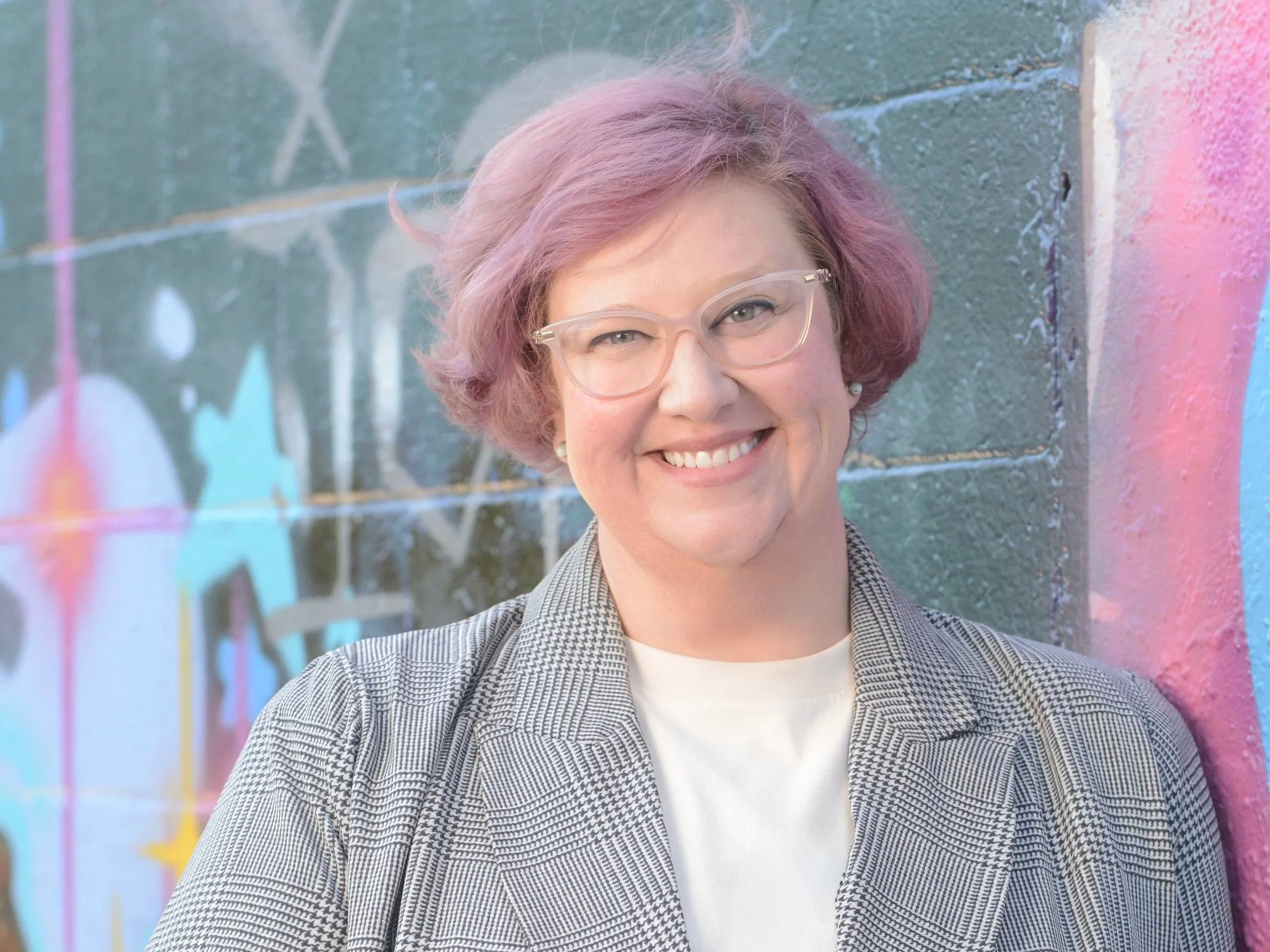
Mandy Parida, MA, LMHC is a neuroqueer therapist in Washington State specializing in neurodivergent adults, LGBTQIA+ clients, and those navigating identity, relationships, burnout, and life outside conventional expectations. Their approach integrates expressive arts, relational psychotherapy, existential inquiry, and neurodiversity-affirming care to help people better understand themselves.