Moon Time: NEUROQUEERing Time Blindness
By Mandy Parida, MA, LMHC
August 7, 2026
What if the problem isn’t only that some brains are bad at time?
“Time blindness” is a common way of describing an experience many neurodivergent people know intimately: difficulty sensing how much time has passed, predicting how long something will take, transitioning between activities, or organizing ourselves around clock time.
Five minutes disappears.
An hour feels immediate.
Getting dressed takes three minutes until the seams in your socks are wrong, you can’t find the thing you were holding thirty seconds ago, and one thought has somehow become a forest.
And then the clock calls you late.
The usual response is to locate the problem inside the person.
They need better time management. More reminders. More alarms. A planner. A visual schedule. Greater awareness of consequences.
Sometimes those tools are useful.
But a neuroqueer lens asks another question: What if the problem isn’t only that some brains are bad at time? What if we’ve built a world around one particular way of experiencing it?
Clock time is a technology
It is extraordinarily useful. We need shared ways of coordinating with one another. Trains need departure times. Therapy sessions have beginnings and endings. Schools, workplaces, meals, appointments, medication schedules, flights, and countless other parts of communal life rely on some shared agreement about when things happen.
But usefulness is not neutrality. We have taken one system for organizing human activity and turned it into a measure of character.
Early is responsible.
On time is respectful.
Late is careless.
Fast is productive.
Slow is inefficient.
And suddenly a tool for coordinating people becomes a moral hierarchy.
For people whose attention, sensory systems, executive functioning, energy, or perception of duration operate differently, the result is often not simply inconvenience.
It is shame.
Time blindness is rarely just about knowing what time it is
A person can know perfectly well that an appointment begins at 2:00 and still struggle to arrive at 2:00.
Because getting somewhere “on time” requires far more than reading a clock.
It requires estimating how long multiple future actions will take. Interrupting the thing you are currently doing. Holding the next steps in working memory. Finding objects. Shifting attention. Tolerating transitions. Accounting for sensory needs. Recovering when something unexpected happens. Beginning tasks before urgency makes them interesting enough for the nervous system to engage.
What gets called “time management” is often an enormous bundle of executive, sensory, relational, and regulatory processes. And yet we frequently treat the final visible outcome—lateness—as though it tells us something about whether someone cared enough to try.
It doesn’t.
Neuroqueering the question
Neuroqueering time blindness does not mean pretending clocks don’t exist. It means refusing to confuse conformity to clock time with competence, morality, effort, or care.
Instead of asking only: How do we make this person better at time?
We can ask: What makes time easier to perceive here? What transitions are being demanded? What executive functions can be externalized? Where can another person share the cognitive load? How much transition time does this nervous system actually need?
Which expectations genuinely require precision, and which exist simply because “that’s how it’s done”?
That shift matters because support can look like timers and calendars. But it can also look like someone saying, “I’ll text you when it’s time to start getting ready.”
It can look like putting the keys beside the door or building in a wider arrival window. Scheduling fewer transitions or doing the first step together.
Giving someone enough information about what comes next that their nervous system doesn’t have to fight the transition.
Or recognizing that a person who reliably arrives seven minutes late may not need another lecture about punctuality.
They may need a world with seven more minutes in it.
Moon Time
I’ve started calling the other experience Moon Time. This is not a clinical terms, it’s a metaphor.
Moon Time is the time where five minutes can become twenty, thoughts turn into forests, and the distance between “I should put my shoes on” and actually leaving the house contains an entire universe.
It is also a reminder that clock time is not time itself. It is one way humans learned to measure it.
Neurodivergent people do not need to be abandoned to chaos. We deserve tools that help us navigate a world structured around clocks. But support should not require shame.
The goal is not to make every nervous system experience time identically. It is to build enough external structure, shared executive functioning, flexibility, and compassion that people can participate without constantly being told that the way their brain moves through the world is a character flaw.
The clock is a tool. It was never supposed to be a measure of human worth.
The language of neuroqueering is deeply influenced by the work of Nick Walker and others in the neurodiversity movement. My understanding has also been shaped by relational psychotherapy, expressive arts therapy, existential therapy, and developmental and attachment-based approaches. This essay reflects my own synthesis of those traditions in clinical practice.
about the author
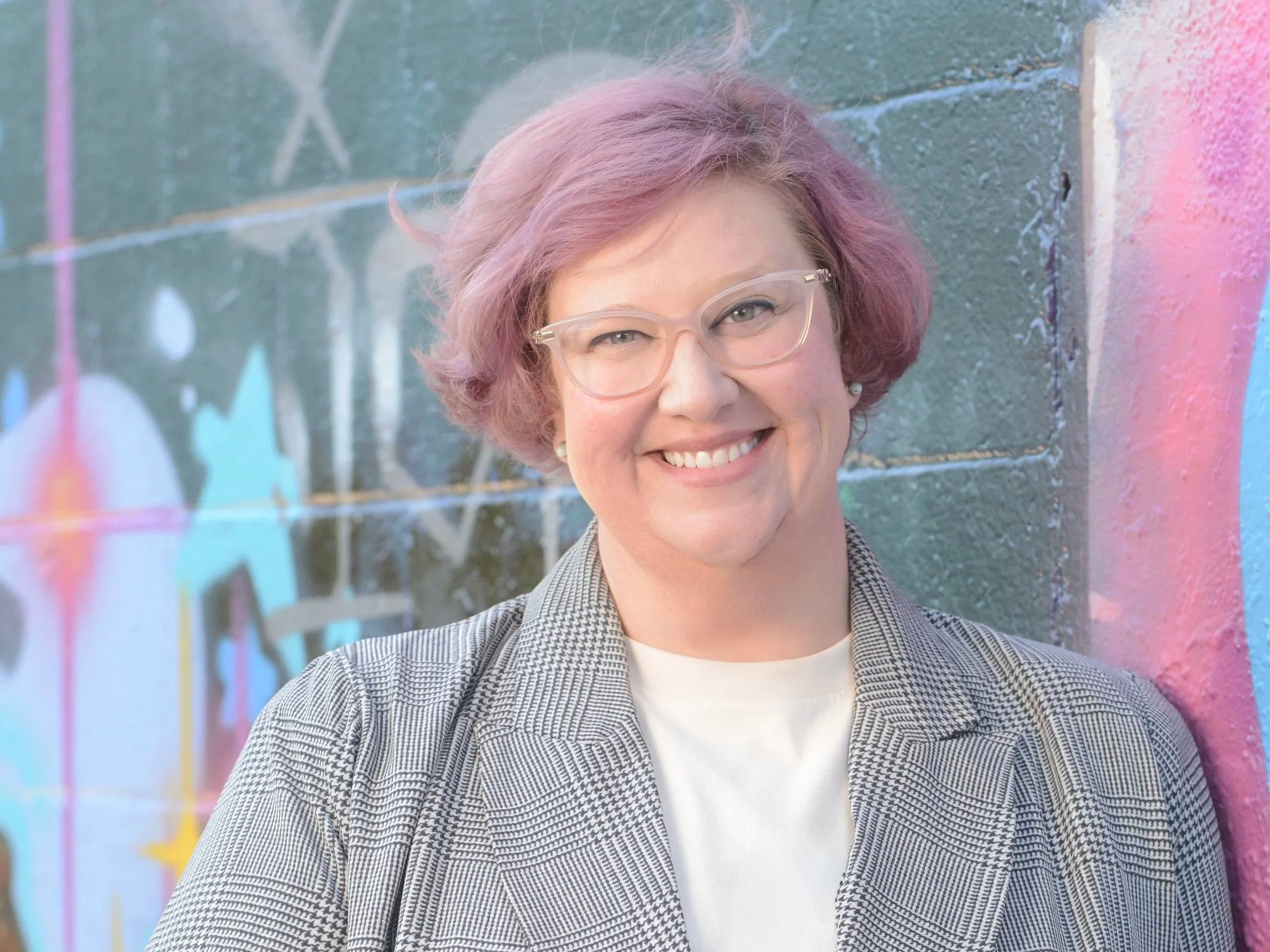
Mandy Parida, MA, LMHC is a neuroqueer therapist in Washington State specializing in neurodivergent adults, LGBTQIA+ clients, and those navigating identity, relationships, burnout, and life outside conventional expectations. Their approach integrates expressive arts, relational psychotherapy, existential inquiry, and neurodiversity-affirming care to help people better understand themselves.